
From the editors
What Crypto Bubbles actually is, and why everyone keeps mentioning it
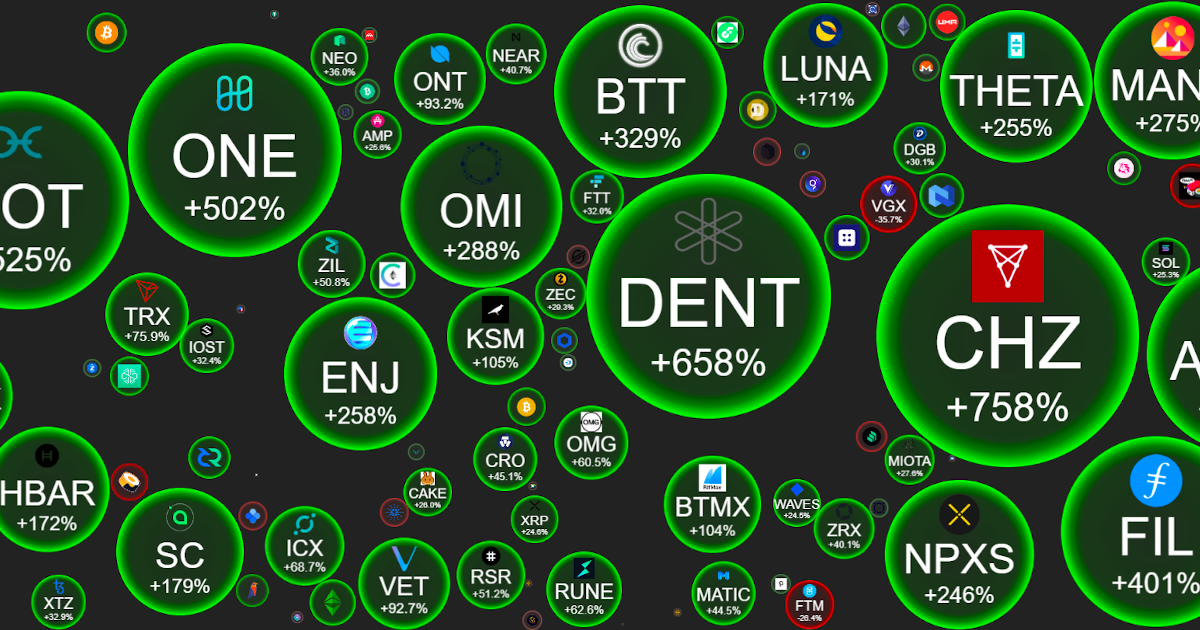
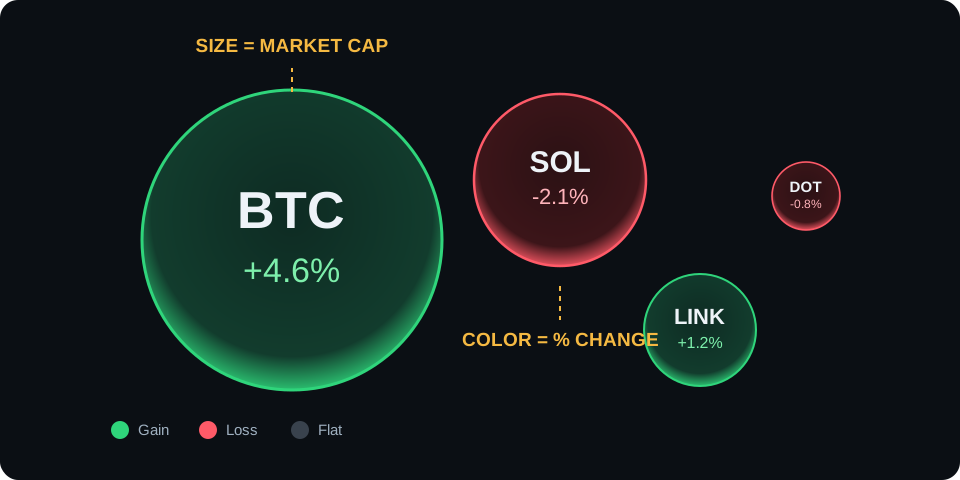
If you have ever tried to make sense of the crypto market through a classic table — row after row, a thousand entries, eight columns of numbers — you know that by page three your eyes start sliding off the screen. Crypto Bubbles solves that problem with brutal simplicity: it turns the table into a board of bubbles. The bigger the bubble, the bigger the coin. The greener it is, the more it rose. The redder it is, the harder it fell. One glance and you know what kind of day the market is having.
The project comes from a German developer, and the app — available in the browser and on iOS and Android — picked up millions of users without a single paid ad. The reason is not mysterious. The human visual system processes size and color orders of magnitude faster than it parses digits. It's the same principle that makes a weather map more useful than a table of temperatures: you don't read a weather map, you see it.
This site — cryptobubbles.app — is an independent guide to that tool. We are not the official site and we don't pretend to be: the official product lives at cryptobubbles.net, and every concrete claim we make about the app is attributed to it. Our job is different. We explain how to use the bubbles so they actually help you, instead of just looking pretty while you make emotional decisions.
Three things bubbles do better than tables
- Context in a fraction of a second. A sea of red with one green island is information you simply cannot get out of a table without sorting and filtering first. Here you register it before you've consciously thought about it.
- Proportion instead of illusion. Newcomers chronically overestimate small coins. When you can see that Bitcoin's bubble would swallow several hundred bubbles of this week's hot memecoin, the scale of the market stops being an abstraction.
- Anomalies announce themselves. A small coin that suddenly jumped 60% lights up the board like a flare. That's the fastest way to find where the market's attention is flowing today — and then go check why.
Note: bubbles describe the past, not the future. Green means "went up", not "will go up". If one sentence from this guide sticks with you, let it be that one.
How to read the board like someone who knows what they're doing
You open the app and see hundreds of circles. Where do you start? First, choose your time window deliberately. The hourly view is the market's pulse: noise, micro-moves, trader nerves. The yearly view is an X-ray: it shows who actually survived and grew, and who merely flashed for a season. The same coin can be vividly green on the daily view and deep red on the yearly one — and both readings are simultaneously true. Our bubble chart guide takes every window apart in detail.
Second, click the bubbles. The board is only a table of contents. Tap one and you get the coin card: price chart, market cap, trading volume, rank, links out. That's where real research starts and color-guessing ends.
Third, filter. The default view shows the largest coins, but you can narrow the board to a slice of the ranking, search for a specific token, or watch only your own list. The narrower the view, the less noise. How that plays out in practice is the subject of our market map guide.
What the bubbles won't tell you
An honest guide has to describe the holes too. Bubbles won't show you liquidity — a coin can be up 40% on volume so thin that a $500 sell order moves the price. They won't show tokenomics: unlock schedules, supply concentrated in a handful of wallets, emission that quietly eats every rally. And they cannot distinguish organic demand from a pump coordinated in a Telegram group. Color tells you what happened. Never why, and certainly not what next.
Before you hit "buy": an exchange is not a wallet
Since Crypto Bubbles sells nothing, sooner or later you and your money will end up on an exchange. And here comes a distinction that is absolutely fundamental in crypto and that beginners mix up constantly. An exchange account (custodial) works like a bank: you deposit funds, and the operator holds the keys. You log in with a password, you can reset access, there's a support desk. A non-custodial wallet (MetaMask, Trust Wallet, a hardware device) is your private safe: the keys are yours alone. Lose the seed phrase and there is no hotline that recovers it. None. Ever.
Neither option is "better" in the abstract. An exchange is convenient for buying, swapping and moving quickly; a self-custody wallet is for holding larger amounts over long stretches of time. The sensible arrangement for most people looks like this: buy on a regulated exchange, and move whatever you don't plan to touch for months into a wallet whose keys you control.
Iron rule: never photograph your seed phrase, never paste it into cloud notes, and never give it to anyone — least of all to "support". Real technical support never asks for it. Not once, not ever, not in any circumstance.
Ready for the first step?
Pick a regulated exchange with a long track record, turn on two-factor authentication on day one, and start with an amount whose loss wouldn't ruin your week.